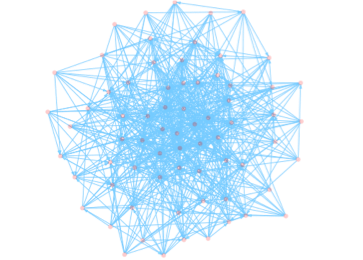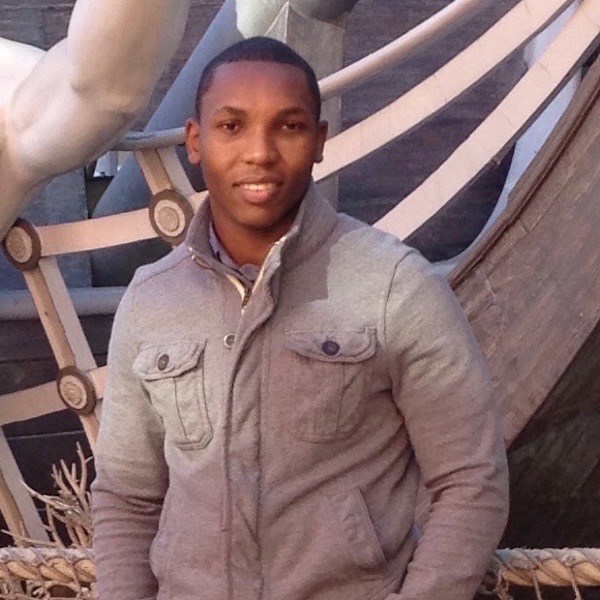
I received my PhD in Computer Science from the Johns Hopkins University. I was part of the Institute for Data Intensive Engineering and Science. My dissertation focused on reimagining infrastructure for large-scale semi-external memory graph analysis and unsupervised clustering. My primary advisor was Randal Burns, PhD. I obtained my Master's in Computer Science and Master's in Engineering Management, both from Hopkins. I also hold a Bachelor's in Electrical and Computer Engineering from Morgan State University.
In 2017, I received the UPE Academic Achievement award and the
Best Presentation award at High-Performance Parallel and
Distributed Computing (HPDC) Conference.
In 2014, I was awarded the Hopkins Computer Science Graduate
(Paul V. Renoff) Fellowship, and the
UPE Special Recognition award.
I love to work on highly-scalable tools, frameworks, systems and libraries for graph analytics and artificial intelligence applications.
I enjoy building scalable backend infrastructure, including RESTful web services and MCPs for SaaS delivery.
I also enjoy studying the effects of computing advancements on businesses and their co-evolution as AI and high-scale computing become ubiquitous in industry and academia alike.
Parallel & Distributed Computing
C++
Python
Backend Dev.
Management
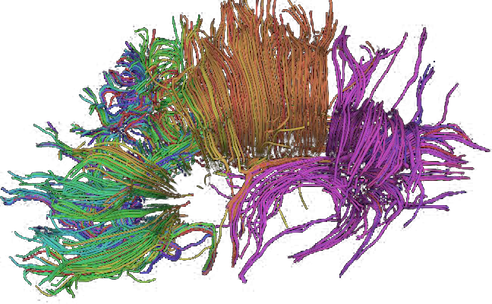
Development and maintenance of back and front-end web-services that leverage Django. The project sits at the intersection of big-data and computational neuroscience as we deliver connectome building and exploratory graph analysis tools.
Development of a vertex-centric, semi-external memory, parallel graph analytics library. Graphyti is developed on FlashGraph and is a high-level Python wrapper over C++. Graphyti inherits its performance characteristics from FlashGraph and can outperform distributed frameworks on billion-node graphs on a single commodity server!
Development of a parallelized, NUMA-architecture aware clustering framework. We utilize fine-grained I/O manipulation, informed thread-binding, NUMA-aware task scheduling and other memory access latency reduction techniques. We achieve a 10–100x speedup when compared with commercial products such as Spark's MLlib, Turi (Formerly Dato, GraphLab) and H2O for k-means, and several-fold speedup for other algorithms.
Monya provides a unified programming interface for the creation and querying for forests of trees. Monya parallelizes tree construction and querying and contains scheduling, caching and memory (de)allocation optimizations.
At Hopkins, I previously taught parallel and distributed computing, covering OpenMP, MPI, Spark, GPU programming via CUDA, and distributed training techniques essential to modern AI and large-scale machine learning workloads. I also taught Python and Excel for data science and engineering bootcamps and seminars.
I received a full scholarship to compete at the NCAA D1 level for Morgan State University as an undergraduate.
I am certified as a USTA P1 (highest level) high-performance tennis coach. I have trained players who have gone on to compete in NCAA D1 tennis at UPenn, Ohio State University, and Loyola University.
Husband, Technologist and Scholar
© 2026 Disa Mhembere